Medical Tattoo Academy
We train practitioners who can go beyond eyebrows and lips to perform reconstructive tattoos — areola, nails, and syndactyly. Director Jeongyoon Kim teaches every session 1:1, from theory to hands-on practice.
Why Now
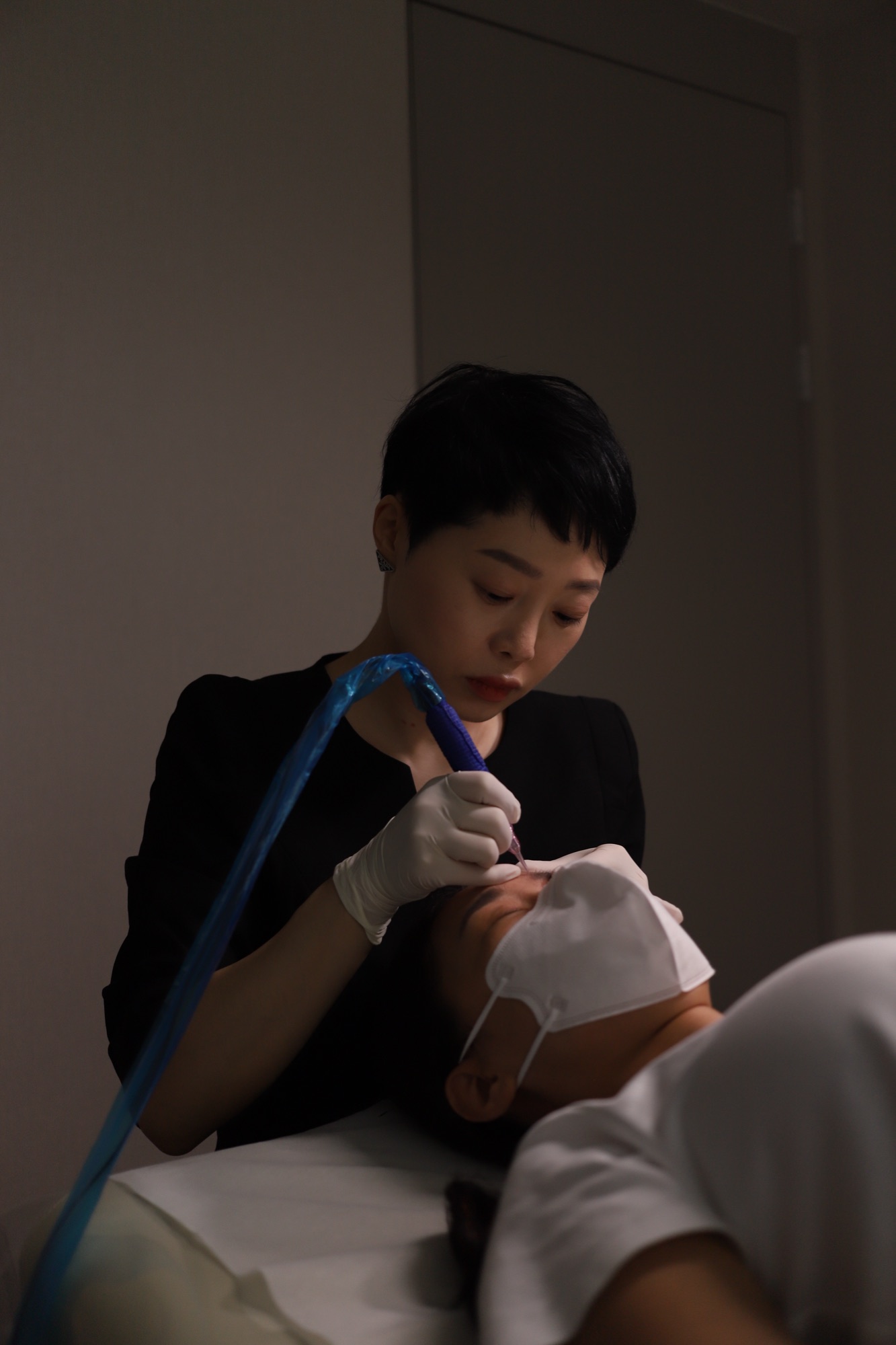
As regulation approaches, practitioners need solid fundamentals and hygiene
South Korea's tattooing legislation passed in 2025, moving the industry toward formal regulation. While the timeline and requirements are set by the relevant authorities, this program focuses on building strong foundations in hygiene, anatomy, and hands-on skills.
Reconstruction expertise
Areola, nail, and syndactyly reconstruction remain a niche with few trained practitioners.
Hygiene & safety
Infection control, cross-contamination prevention, and understanding of skin and scar tissue come first.
Real-world portfolio
Practice on live models to build your own case portfolio and learn consultation skills.
Training Environment
Learn in a private 1:1 setting
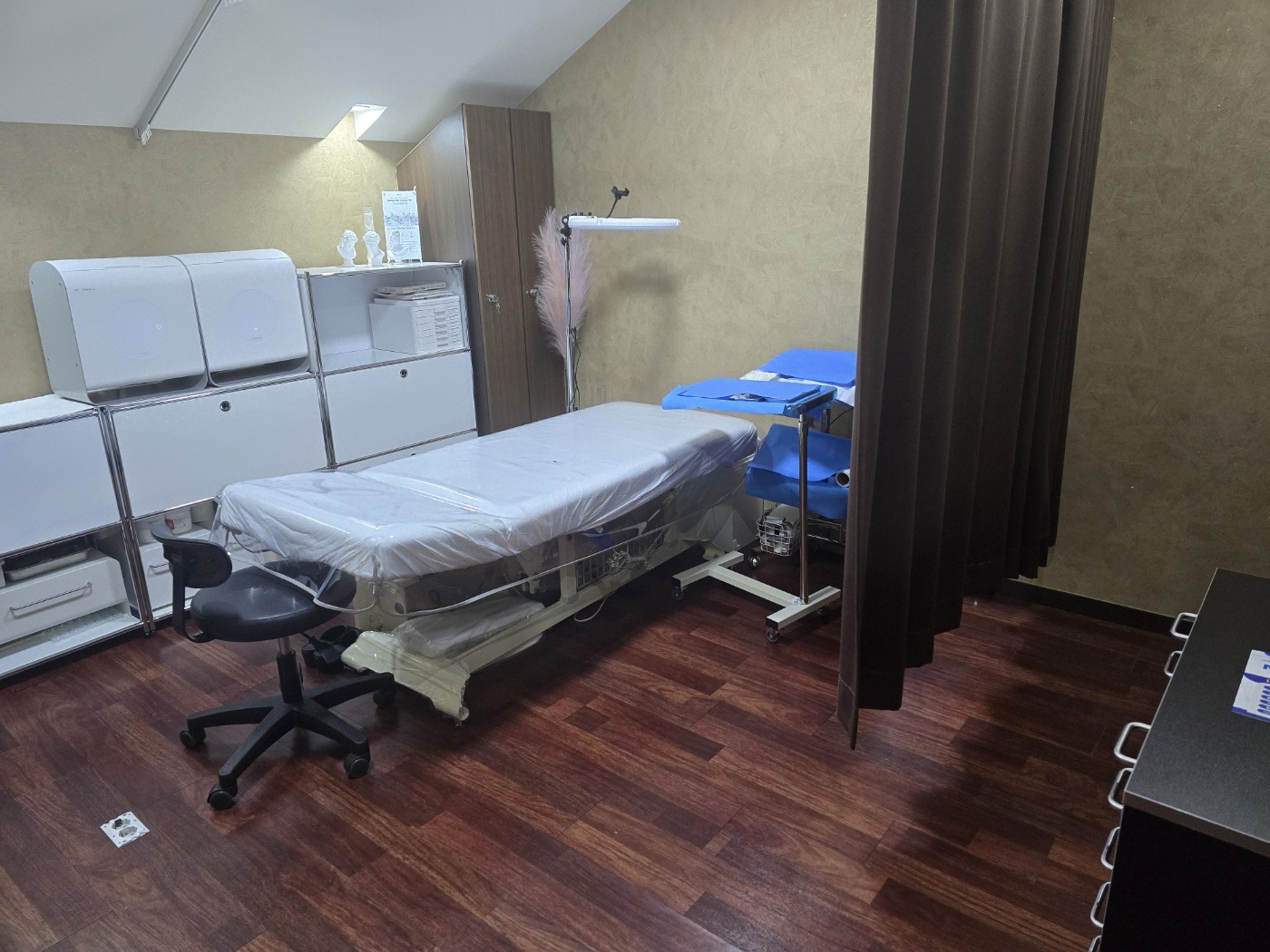
All training takes place in the same VIP private rooms used for actual procedures. This way, students naturally learn real-world hygiene workflow, equipment layout, and privacy management.
- VIP private room — restricted access during procedures
- Sterile equipment and single-use needle practice
- Identical setup to live client sessions
Curriculum
6-Step Hands-On Training
All classes are in-person only. No video lectures or shipped kits. Correcting hand angle, pressure, and micro-movements requires on-site guidance.
-
Step 1 · Foundation Theory
Understand the principles before picking up a machine. Build a sense of responsibility before starting practice.
- Facial and chest anatomy — bone structure, blood vessel distribution, epidermis and dermis
- Skin type analysis — Fitzpatrick classification, pigment response by melanin level
- Color theory — complementary colors, 3–4 stage color blending, predicting color shift
- Golden ratio (1.618) symmetry measurement and design principles
- Hygiene — infection control, cross-contamination prevention, sterilization protocols
- Active-listening consultation — managing client expectations, pre-procedure psychological care
-
Step 2 · Latex & Synthetic Skin Practice
The stage where we invest the most time. Repeat until accurate stroke control becomes second nature.
- Pointillism for 3D dimensional expression
- Figure-8 shading and gradation drills
- Precision outline control
- Stroke depth, pressure, and pigment density by skin type (oily, dry, combination)
- Needle type characteristics and replacement
- Machine speed and pressure settings practice
-
Step 3 · 1:1 Precision Correction
The core of in-person training that cannot be learned online.
- Hand tremor correction — stable grip and posture
- Real-time needle angle and depth analysis
- Touch intensity and stroke direction feedback
- Areola stencil design — placement, sizing, bilateral symmetry
- Key points for working on scar tissue (skin grafts, suture scars)
-
Step 4 · Live Procedure Observation
Observe an actual areola restoration procedure on a post-breast-reconstruction client.
- Surgical history review — assessing skin condition by surgery type
- Design consultation observation — color and size matching to the healthy side
- Pre-procedure hygiene workflow
- Multi-layer pigment application — step-by-step pigment building technique
- Aftercare guidance and touch-up scheduling
-
Step 5 · First Procedure (Mentored)
The student performs the procedure while Director Jeongyoon Kim mentors every step.
- Client consultation — expectation alignment, consent form
- Design — stencil creation, placement confirmation
- Hygiene preparation — equipment setup, sterilization
- Live procedure — from first pigment pass to shading finish
- Recovery guidance — aftercare instructions, touch-up scheduling
-
Step 6 · Completion & Career Entry
Support continues after graduation.
- Certificate of completion
- Portfolio coaching — photography techniques, social media setup
- Client interaction scenarios — phone and KakaoTalk consultation role-play
- Color shift management, maintenance, and touch-up protocols
- Hospital/clinic referral — partnership introduction methods
- Intern opportunities and priority invitations to advanced seminars
※ Tuition, duration, and scheduling are discussed individually during consultation. This program does not guarantee any national certification.
Equipment & Materials
Train with the same tools used in real procedures
The equipment and pigments used in training are identical to those used in actual procedures. From day one, students work with real tools so they can adapt immediately in practice after graduation.
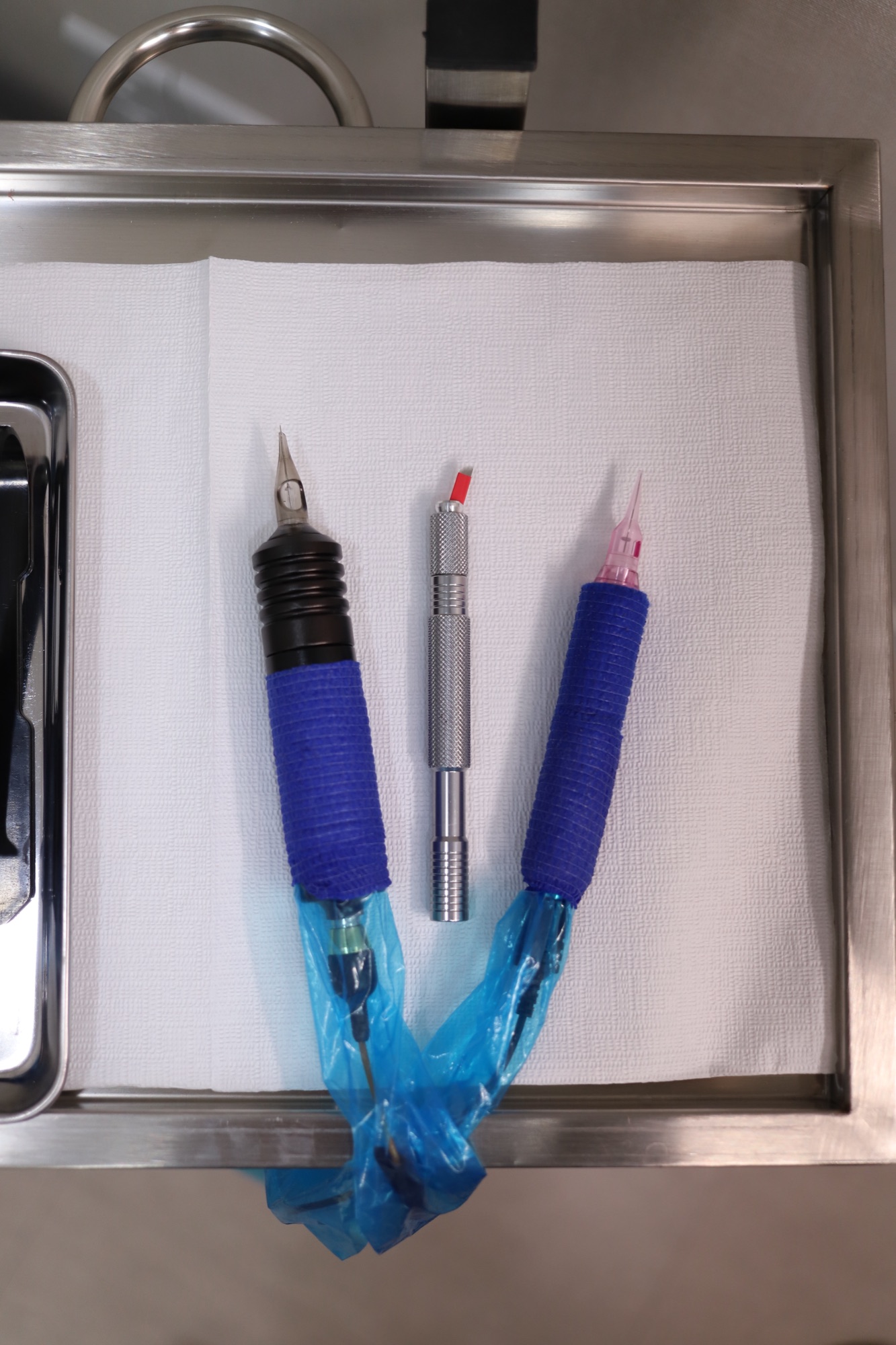
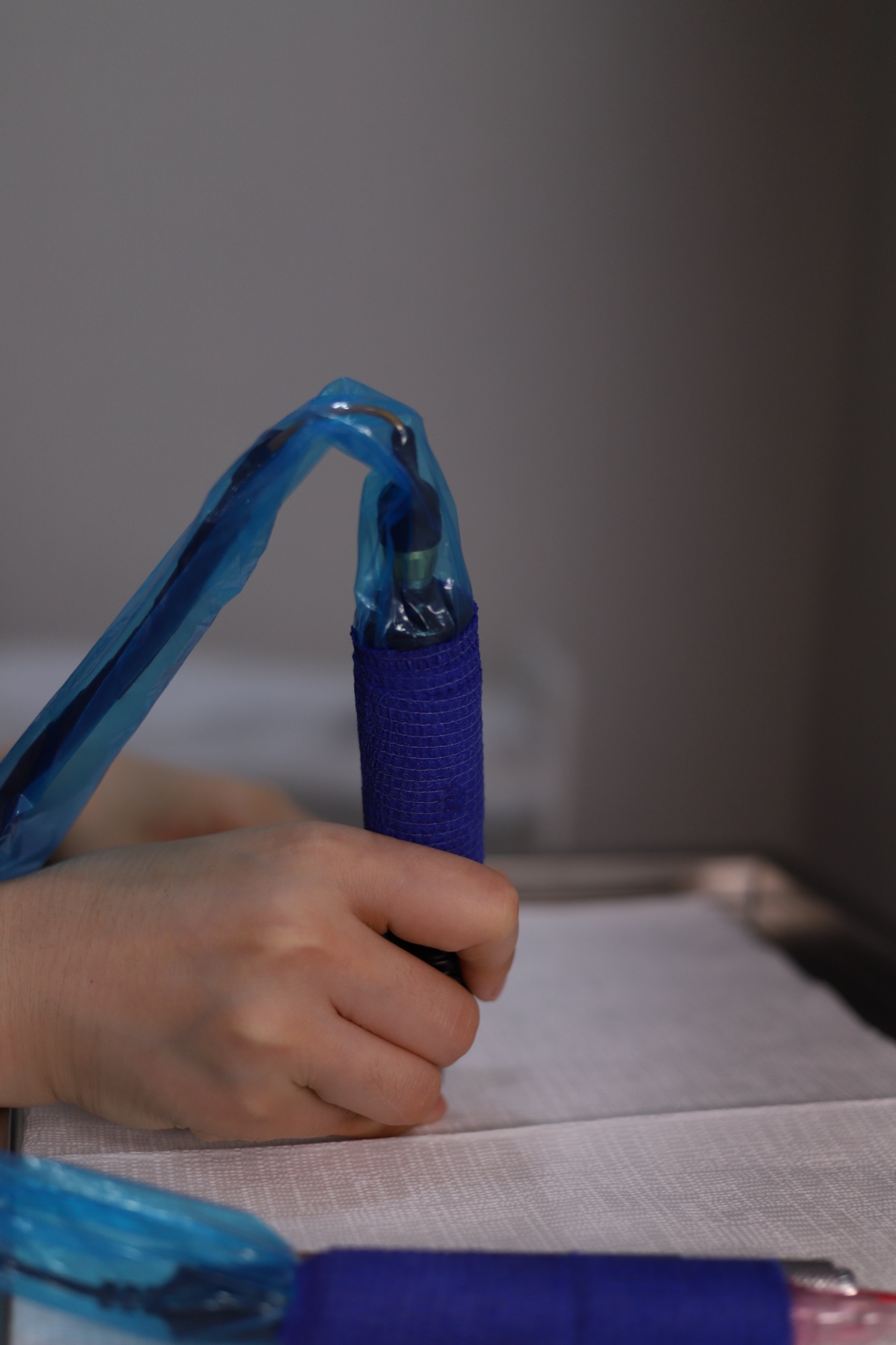
Tattoo machines
Learn the characteristics of machines for different purposes, needle replacement, and hygiene maintenance.
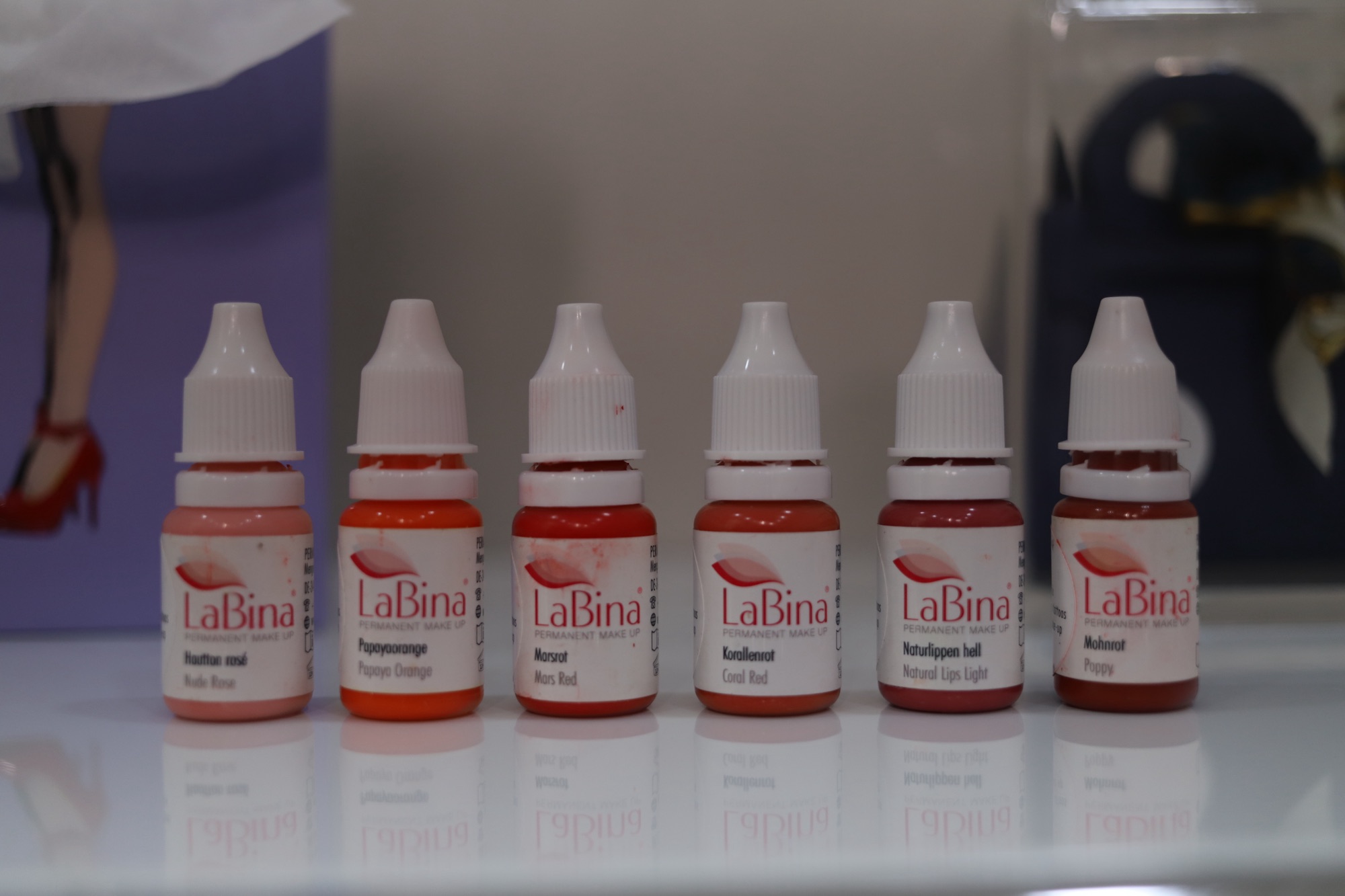
Pigment lineup
Hands-on practice selecting and blending pigments by skin tone and treatment area.
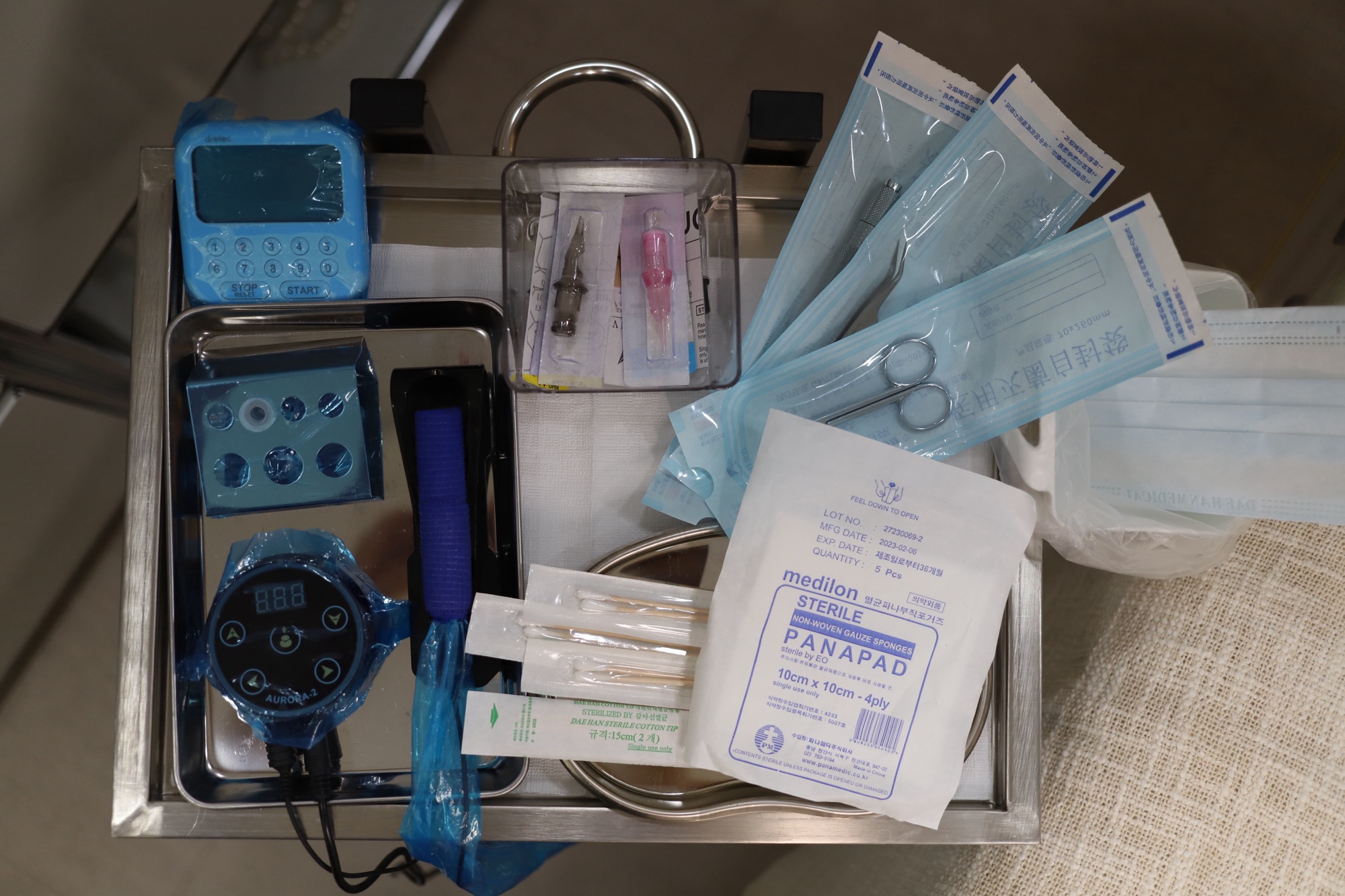
Sterile setup
Learn infection prevention protocols: individually wrapped needles, sterile gauze, and hygiene trays.
Core Technique
Glossy 3D Areola Restoration
Go beyond flat coloring — learn advanced techniques that create realistic gloss and dimension.
Color planning
Analyze melanin density in skin-graft areas and practice 3–4 stage color blending to match the healthy areola. Design accounts for pigment fading to ensure long-term results.
Dimensional shading + Montgomery tubercles
Darkest at the nipple center, natural gradation outward. Techniques to add visual volume when the nipple is flat, plus reproducing Montgomery tubercles — the small bumps on the areola surface.
Consultation & emotional care
Training includes assessing health and skin type, clearing misconceptions, and active listening. Learn to build trust through simulation designs and to understand the psychology of post-surgical clients.
Areola Restoration 5-Day Intensive
A focused program for reconstructing areolas and nipples after breast surgery. Five days of in-person training covering theory through hands-on procedure.
- Day 1 · Breast reconstruction theorySkin condition analysis by reconstruction type, post-radiation skin characteristics, areola and nipple anatomy, allergy patch test protocol
- Day 2 · Color matching practice3–4 stage color blending matched to the healthy areola, Fitzpatrick-based pigment combinations, stippling and gradation basics, latex drills
- Day 3 · 3D dimension & detailMontgomery tubercle recreation, nipple shadow for height illusion, natural border gradation, stencil design (size, position, bilateral symmetry)
- Day 4 · Observation & simulationObserve the Director's live areola restoration, assess skin by surgical history, analyze multi-layer pigment build-up, full simulation on practice skin
- Day 5 · Mentored procedure & graduationHands-on procedure under the Director's real-time mentorship, consultation through aftercare, before/after photography, graduation assessment
- For foundation course graduates or practitioners with PMU experience
- Specialized course for areola restoration after breast reconstruction
- Small class size — 1:1 instruction by the Director
Advanced Course
Luxury Brows — Premium Eyebrow PMU Training
Beyond simply drawing pretty brows: a comprehensive analysis of facial bone structure, expression muscles, and skin tone to create dimensional, customized designs.
Personalized design
Analyze face shape, hair color, and facial muscles to design the optimal brow for each client. Learn design differences by gender and age, plus asymmetry correction techniques.
Multi-dimensional stroke technique
Combine the strengths of machine and blade in a combo approach. Mix hair strokes, shading, and gradation by zone for natural density variation.
Premium consultation skills
Read client needs and propose image strategies. Covers photography angles, lighting, social media content creation, pricing strategies, and business launch essentials.
Combo Brow 7-Day Intensive
A 7-day in-person intensive combining microblading and machine strokes. Master the natural look of hand strokes together with machine precision.
- Day 1 · TheoryCombo technique overview, brow bone structure and design proportions, skin-type strategies, pigment theory and color shift prediction
- Day 2 · Manual stroke intensiveBlading remaster, thickness/direction/pressure control, stroke pattern practice on latex
- Day 3 · Machine stroke + comboDevice setup and needle types, speed/depth control, hand + machine combo practice
- Day 4 · SimulationOily/combination skin strategies, old tattoo cover simulation, mid-course skill diagnosis
- Day 5 · Model designLive model consultation, stroke layout and pigment selection, positioning corrections
- Day 6 · Model procedureHands-on combo procedure on a live model with real-time feedback and stroke corrections
- Day 7 · Portfolio + graduationBefore/after photography, social media portfolio consulting, certification
- Advanced course for experienced practitioners — beginners must complete the foundation first
- Premium artists entering the high-end treatment market
- Practitioners struggling with oily or combination skin clients
Training Insights
Common Eyebrow Mapping Mistakes and How to Avoid Them
Our academy teaches not just technique, but the eye to prevent mistakes before they happen. Here are the most common errors in eyebrow mapping and their solutions.
Skin Tension
Failing to stretch the skin while drawing brow outlines causes distorted lines. Gently spread the skin around the brow area with your fingers to create a flat surface before mapping for smooth, precise designs.
Accurate Measurement
Imprecise arch placement, height, length, or width leads to asymmetric results. Brows are not perfect twins, but they should be sisters. Always verify balance with golden-ratio measurement tools.
Following Natural Hair Patterns
Strokes and shading must follow the client's natural hair growth direction and spacing. Designs that deviate from natural brows create maintenance burdens, defeating the purpose of the procedure.
Stable Hand Support
Rest your fingers on the client's face for stability, just as you would anchor your hand when drawing on paper. Working without support causes hand tremors, resulting in uneven outlines and asymmetry.
Adequate Time Allocation
Rushing affects the final result significantly. Allow sufficient time for each step: consultation, design, verification, procedure, and mid-session checks with various facial expressions.
Proper Tools
Precision rulers, mapping pencils, and specialized stencils are not mere props. Regular practice with quality tools until they become second nature is essential for flawless results.
Specialized Courses
Nail & Syndactyly Reconstruction Training
After completing the core program, you can advance to specialized reconstruction techniques for nails and syndactyly shadow tattooing.
Nail reconstruction tattoo
Nail anatomy, cuticle and lunula rendering, 3D gloss effects, skin-tone color matching, and silicone foot model practice. A high-value skill for clients missing nails after chemotherapy, trauma, or fungal damage.
Syndactyly shadow tattoo
Creating visual separation between fused toes using shadow and gradation — without surgery. This significantly reduces the client's psychological burden.
Career paths
Collaborate with reconstruction clinics, expand into teaching and training — build a differentiated career with expertise still rare in the field.
Career Path
Where can you go after graduation
Graduation is the starting point. We design a roadmap that takes you from intern to independent artist to trainer, building experience at every stage.
-
Graduate
Course completionReceive your certificate, portfolio coaching, before/after photography techniques, and social media content strategy.
-
Intern
Practical adaptationParticipate in real client procedures under the Director's supervision. Develop consultation skills, hygiene protocols, and touch-up judgment through hands-on experience.
-
Independent Artist
Solo practiceBegin hospital/clinic partnerships or open your own studio. Stay current through regular workshops and a professional community.
-
Trainer
Expand into educationAfter building substantial experience, train the next generation. Priority access to advanced seminars and support for international PMU career opportunities.
- Internship placement after graduation
- Hospital and clinic partnership network introductions
- International PMU career prep — English resume and portfolio support
- Priority invitations to regular workshops and 1-day advanced classes
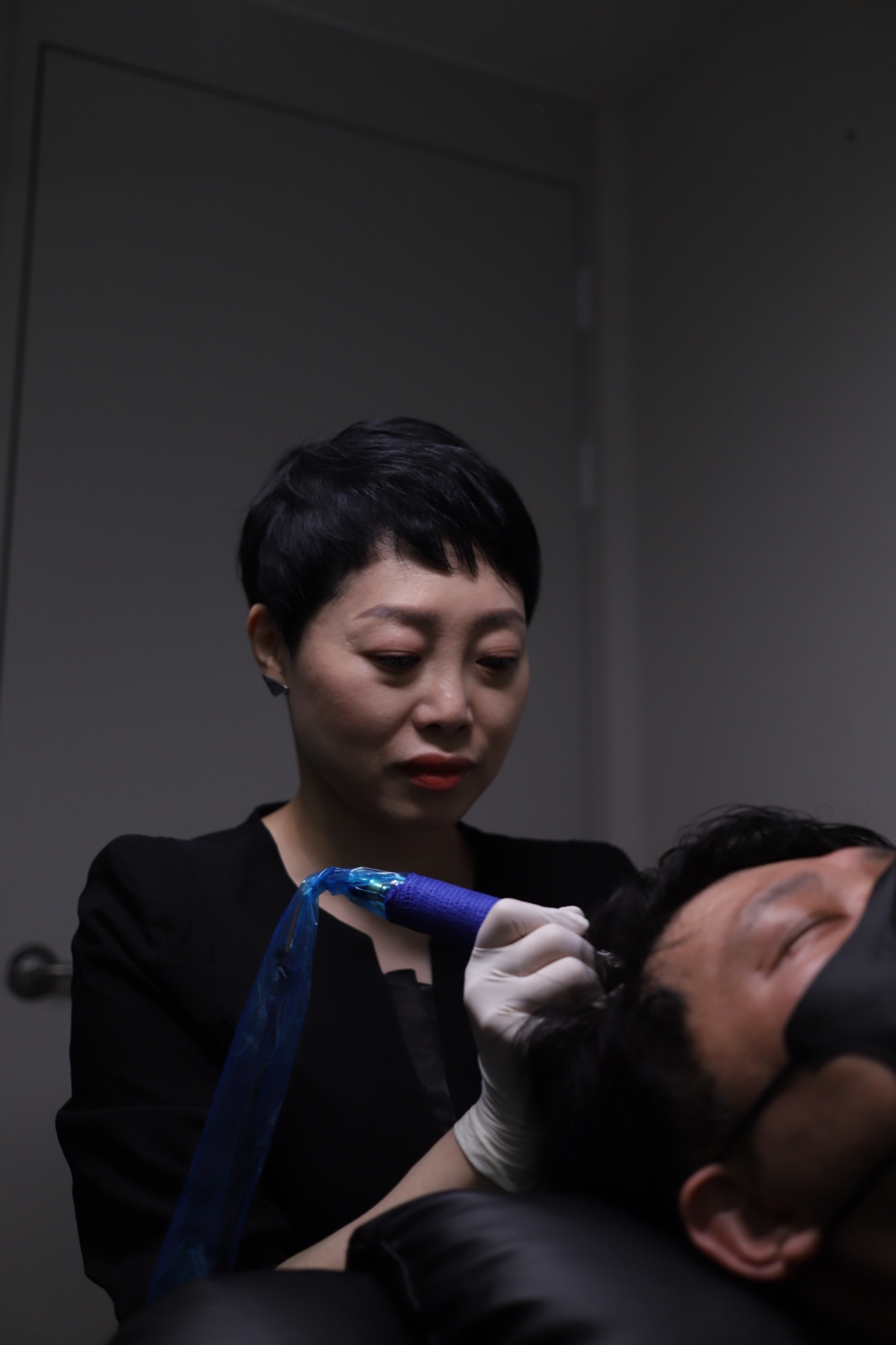
In the Director's words
"This isn't just about restoring an eyebrow. It's about touching someone's heart. That's why I keep learning, practicing, and teaching."
Student Reviews
What they learned went beyond technique
"I expected to just learn drawing skills for areola tattoos, but it was completely different."
"Instead of just following along visually, I learned the 'why' behind everything and what it means to take responsibility."
"Watching the Director's hands, I ended up learning with my heart, not just my eyes."
"The model teared up looking at her photo after the procedure. I realized this work needs sincerity, not just skill."
Who This Is For
For those who want to learn philosophy, not just technique
- Eyebrow/eyeliner technicians looking to expand into medical reconstruction artistry
- Those who want to grow into a semi-permanent specialist with genuine empathy
- Anyone seeking real skills and philosophy, not a short-term certificate course
- Those who want precise, practice-focused, in-person training
- Those looking for a program that leads to real-world career entry after completion
Book a Consultation
Start with a phone call
Tell us about your surgery, the area of concern, and the result you're hoping for. We'll let you know whether the procedure is right for you, along with scheduling and pricing. All sessions are by appointment only.