Syndactyly & Scar Cover Tattoo
After syndactyly separation surgery, digits that appear fused due to shallow webbing, or visible skin graft boundaries and scar discoloration, are naturally refined using shadow shading and skin-tone matching.
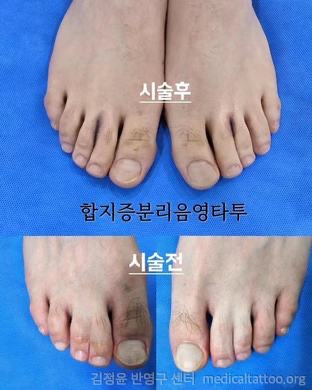
Post-syndactyly shading
Even after separation surgery, shallow webbing can make digits appear joined from a distance. Deep shadow shading is drawn in the gap between digits so they look clearly separated.
- 3D shadow shading between fingers or toes
- Softening the color difference at skin graft boundaries
- Pigment blending that accounts for seasonal skin tone changes
Surgical & trauma scar cover
Scars that remain lighter than surrounding skin, or color differences from skin grafts, are matched to the surrounding tone. Some scar types may require other treatments first or may not be suitable for tattooing, so we always assess during consultation.
- Depigmented surgical scars
- Cleft lip surgery border lines
- Mature scars only
Before & After
Syndactyly shading cases
※ Results vary depending on skin condition, scar tissue, and lifestyle. Redness, swelling, scabbing, or itching may occur after the procedure, and some color loss requiring a touch-up is normal. Expected outcomes and precautions are fully explained during the pre-procedure consultation.
FAQ
Scar Cover FAQ
Can all scars be treated?
Scars that are still red, raised, or have keloid tendency may need to wait or undergo dermatological treatment first. We'll assess eligibility via a photo consultation.
How long after surgery can I have the procedure?
It's best once the scar has matured and its color and firmness have stabilized — typically about one year after surgery, assessed on an individual basis.
Book a Consultation
Start with a phone call
Tell us about your surgery, the area of concern, and the result you're hoping for. We'll let you know whether the procedure is right for you, along with scheduling and pricing. All sessions are by appointment only.